Cristina Lucas
Cristina Lucas works with data — whether it be the prices of chemical elements, global trade routes, or the slang names for genitalia in different cultures — in many of her projects. Although the language of art and the language of science are traditionally considered distinct from one another, the artist demonstrates that data can both help us understand reality and be used as an image. In the installation “Clockwise,” for example, Lucas hung 360 clocks around the perimeter of a circular room, showing: all possible times on a globalized planet simultaneously. The chorus of out-of-sync clocks was reminiscent of the sound of rain.
Cristina Lukas
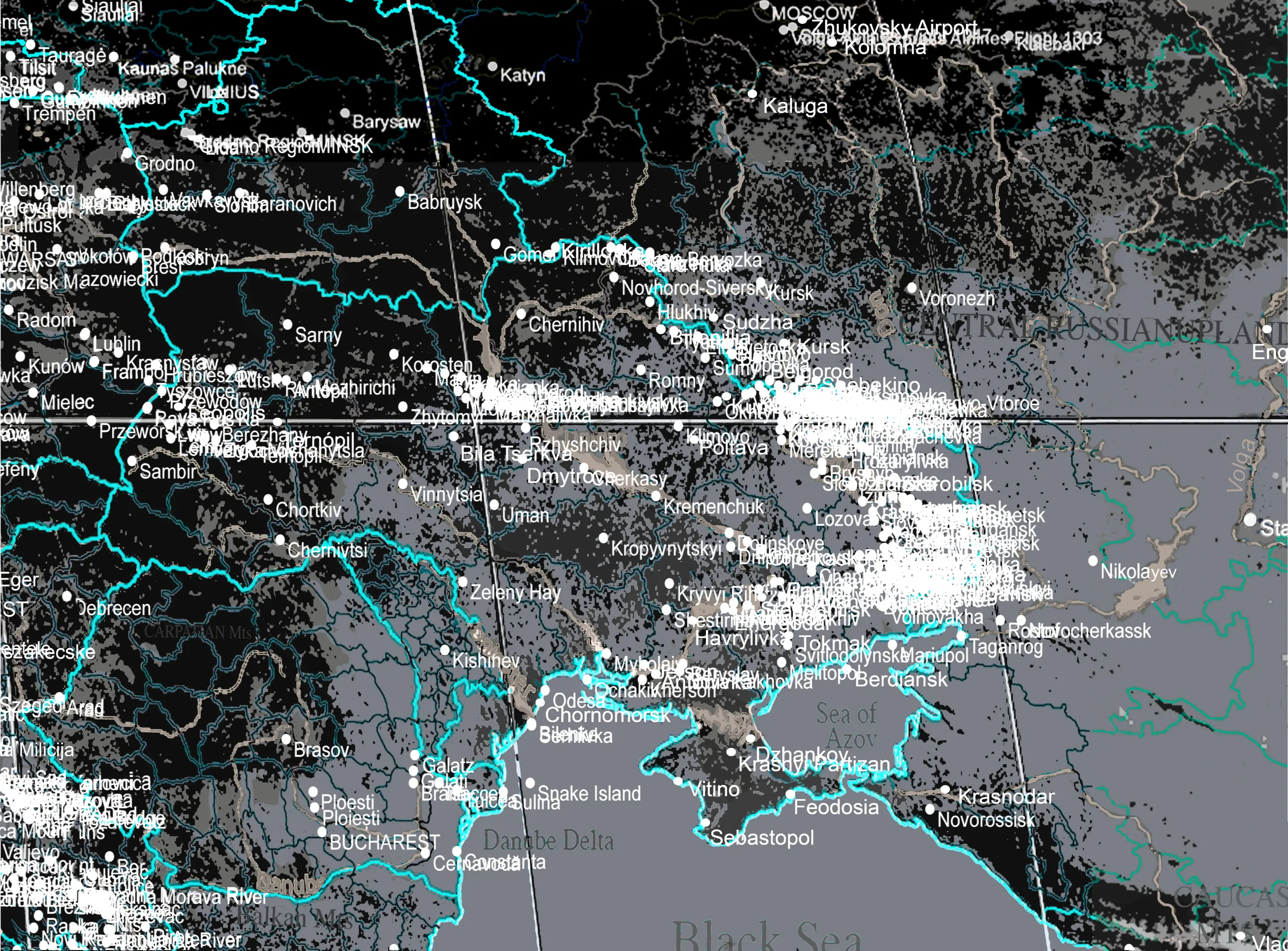
The artist creates videos, installations, sculptures, and photographs. Her main themes are human rights, with a particular focus on women's, capitalism, and war — in a word, power. One of Lucas' favorite media is the geographical map, often dynamic, on which the viewer can follow certain events, such as the military expansion of states or the spread of democracy.
Cristina Lucas was born in Úbeda, Spain, in 1973. She studied at the Complutense University of Madrid, the University of California Irvine, and the Rijksakademie van Beeldende Kunsten in Amsterdam. The artist has participated in the Manifesta Biennial in Palermo, and the Liverpool and Ural Industrial Biennials, among others, and has had solo exhibitions in Spain, the Netherlands, Austria, Luxembourg, and Mexico. Lucas's work has been acquired for the collections of the Centre Pompidou in Paris, the Kiasma Museum in Helsinki, and many other institutions. She lives and works in Madrid.